Thursday, April 25, 2013

Important features of the gastrointestinal tract


Important features of the gastrointestinal tract


The following are some of the important features of the human gastrointestinal tract.

1. There is a copious blood supply.

2. The entire tract is lined with mucous membrane through which drugs may be readily transferred into the general circulation.

3. The interior surface of the stomach is relatively smooth.

4. The small intestine presents numerous folds and projections.

5. Approximately 8–10 L per day of fluids are produced or secreted into the gastrointestinal tract and an additional 1–2 L of fluid is obtained via food and fluid intake.

6. The gastrointestinal tract is highly perfused by a capillary network, which allows absorption and distribution of drugs to occur. This immediate circulation drains drug molecules into the portal circulation, where absorbed drugs are carried to the liver and may undergo first pass effect.

Saturday, February 23, 2013

Omega-3 fatty acids


Omega-3 fatty acids

Omega-3 fatty acids (also called ω−3 fatty acids or n−3 fatty acids) are fats commonly found in marine and plant oils. They are polyunsaturated fatty acids with a double bond (C=C) starting after the third carbon atom from the end of the carbon chain. The fatty acids have two ends—the acid (-COOH) end and the methyl (-CH3) end. The location of the first double bond is counted from the methyl end, which is also known as the omega (ω) end or the n end.
Common sources of omega–3 fatty acids include fish oils, algal oil, squid oils, and some plant oils such as Sacha Inchi oil, echium oil, flaxseed oil and hemp oil.


Cancer

The evidence linking the consumption of fish to the risk of cancer is poor Supplementation with omega-3 fatty acids does not appear to affect this risk either.
A 2006 report in the Journal of the American Medical Association, in their review of literature covering cohorts from many countries with a wide variety of demographics, concluded that there was no link between omega−3 fatty acids and cancer.

Cardiovascular disease

Omega-3 fatty acids also have mild antihypertensive effects. When subjects consumed omega-3 fatty acids from oily fish on a regular basis, their systolic blood pressure was lowered by about 3.5–5.5 mmHg. The 18 carbon α-linolenic acid (ALA) has not been shown to have the same cardiovascular benefits that DHA or EPA may have. 
Omega-3 fatty acids in algal oil, fish oil, fish and seafood have been shown to lower the risk of heart attacks.

Inflammation

Although not confirmed as an approved health claim, current research suggests that the anti-inflammatory activity of long-chain omega−3 fatty acids may translate into clinical effects. For example, there is evidence that rheumatoid arthritis sufferers taking long-chain omega−3 fatty acids from sources such as fish have reduced pain compared to those receiving standard NSAIDs. Some potential benefits have been reported in conditions such as rheumatoid arthritis.

Developmental disorders

Although not supported by current scientific evidence as a primary treatment for ADHD, autism spectrum disorders, and other developmental differences, omega-3 fatty acids have gained popularity for children with these conditions. 
Omega-3 fatty acids offer a promising complementary approach to standard treatments for ADHD and developmental coordination disorder. Fish oils appear to reduce ADHD-related symptoms in some children. Double blind studies have shown "medium to strong treatment effects of omega 3 fatty acids on symptoms of ADHD".

Psychiatric disorders

Though there is some evidence that omega-3 fatty acids are related to a variety of mental disorders. They may tentatively be useful as an add-on for the treatment of depression associated with bipolar disorder and there is preliminary evidence that EPA supplementation are helpful in cases of depression. There however is a significant risk of bias in the literature.


Cognitive aging

Epidemiological studies suggest that consumption of omega-3 fatty acids can reduce the risk of dementia, but evidence of a treatment effect in dementia patients is inconclusive. However, clinical evidence suggests benefits of treatment specifically in patients who show signs of cognitive decline but who are not sufficiently impaired to meet criteria for dementia.


List of omega−3 fatty acids

This table lists several different names for the most common omega−3 fatty acids found in nature.


Common name
Lipid name
Chemical name
16:3 (n−3)
all-cis-7,10,13-hexadecatrienoic acid
18:3 (n−3)
all-cis-9,12,15-octadecatrienoic acid
18:4 (n−3)
all-cis-6,9,12,15-octadecatetraenoic acid
20:3 (n−3)
all-cis-11,14,17-eicosatrienoic acid
20:4 (n−3)
all-cis-8,11,14,17-eicosatetraenoic acid
20:5 (n−3)
all-cis-5,8,11,14,17-eicosapentaenoic acid
21:5 (n−3)
all-cis-6,9,12,15,18-heneicosapentaenoic acid
Docosapentaenoic acid (DPA),
Clupanodonic acid
22:5 (n−3)
all-cis-7,10,13,16,19-docosapentaenoic acid
22:6 (n−3)
all-cis-4,7,10,13,16,19-docosahexaenoic acid
24:5 (n−3)
all-cis-9,12,15,18,21-tetracosapentaenoic acid
Tetracosahexaenoic acid (Nisinic acid)
24:6 (n−3)
all-cis-6,9,12,15,18,21-tetracosahexaenoic acid


The omega−6 to omega−3 ratio (Most Important)

Some clinical studies indicate that the ingested ratio of omega−6 to omega−3 (especially linoleic vs alpha-linolenic) fatty acids is important to maintaining cardiovascular health. However, two studies published in 2005 and 2007 found that while omega−3 polyunsaturated fatty acids are extremely beneficial in preventing heart disease in humans, the levels of omega−6 polyunsaturated fatty acids (and therefore the ratios) were insignificant. 
Both omega−6 and omega−3 fatty acids are essential; i.e., humans must consume them in the diets. Omega−6 and omega−3 eighteen-carbon polyunsaturated fatty acids compete for the same metabolic enzymes, thus the omega−6:omega−3 ratio of ingested fatty acids has significant influence on the ratio and rate of production of eicosanoids, a group of hormones intimately involved in the body's inflammatory and homeostatic processes which includes the prostaglandins, leukotrienes, and thromboxanes, among others.
This necessitates that omega−6 and omega−3 be consumed in a balanced proportion; healthy ratios of omega−6:omega−3, according to some authors, range from 1:1 to 1:4 (an individual needs more omega−3 than omega−6). Other authors believe that ratio 4:1 (when the amount of omega-6 is only 4 times greater than that of omega-3) is already healthy. Studies suggest the evolutionary human diet, rich in game animals, seafood, and other sources of omega−3, may have provided such a ratio.


Daily values

As macronutrients, fats are not assigned Dietary Reference Intakes. Macronutrients have acceptable intake (AI) levels and acceptable macronutrient distribution ranges (AMDRs) instead of RDAs. The AI for omega−3 is 1.6 grams/day for men and 1.1 grams/day for women, while the AMDR is 0.6% to 1.2% of total energy.


Grams of omega−3 per 3oz (85g) serving
Common name
grams omega−3
Herring, sardines
1.3–2
1.1–1.7
Salmon
1.1–1.9
0.60–1.12
Tuna
0.21–1.1
0.97
0.95
0.9
Tuna (canned, light)
0.17–0.24
0.45
0.15–0.24
0.22–0.3
0.48
0.23
0.13
0.028
0.29
0.83
0.36
0.41
0.40
0.31
0.30
0.23
0.22
0.109
0.100
0.100
0.031
0.030
0.00
0.00
0.00
0.00
0.00


Prebiotic Supplements


Prebiotic Supplements
Prebiotic supplements are your best choice for any problems or disorders in your digestive system. While there’s many products on the market to help deal with symptoms like constipation and heartburn, only masking the symptoms with short-term relief. Prebiotics, given enough time to re-balance your system may help cure many of them.
Prebiotics are foods that support probiotics that is the beneficial bacteria in the intestines. This is the best, natural way to achieve good digestive health. By adding more good bacteria you will improve your immune system and help your liver to function better thus further protecting yourself from viruses, dangerous toxins and cancer causing cells.
Other Foods That Have Prebiotics:
  • whole grains
  • fruits
  • vegetables
  • certain fats
  • herbs
  • spices
  • red wine
  • dark chocolate

Fiber is the best known prebiotic. It’s a carbohydrate like sugar and starch and is found in all foods of plant origin like grains, nuts, seeds, fruits, and vegetables. Even though fiber passes right through our digestion track without being broken down, it has a valuable function as a prebiotic that supports the probiotic microbes in our gut.


Benefits of Prebiotics:
Prebiotics work to feed probiotics helping to create an environment in our digestion system that is condusive in creating friendly bacteria which do not harm our body but rather protect it from harmful bacteria that can invade intestinal wall cells and cause infection, even polyps which are precursors to colon cancer.

High claims about probiotic supplements in foods such as yogurt products have helped to skyrocket this industry but the European Food Safety Authority have rejected most of these claims saying they could not be substantiated.
People who are not getting the results they were expecting from taking probiotics are looking at increasing their prebiotic intake to maximize their benefits.

Prebiotics + Probiotics = Synbiotics

To get the full benefits of probiotics, they are combined with prebiotics which creates something called a symbiotic. Some research has shown this can help to reduce the risk of colon cancer. Synbiotics are known to help in the healing time with people that have had serious injuries or surgery and have reduced the risk of things like blood infections and pneumonia.

Thursday, December 13, 2012

Gas Chromatography

Gas Chromatography

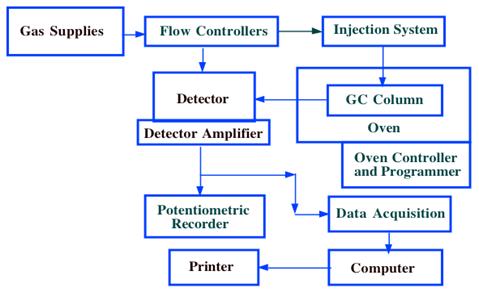
Gas chromatography (GC) is an analytical technique for separating compounds based primarily on their volatilities. Gas chromatography provides both qualitative and quantitative information for individual compounds present in a sample. Compounds move through a GC column as gases, either because the compounds are normally gases or they can be heated and vaporized into a gaseous state. The compounds partition between a stationary phase, which can be either solid or liquid, and a mobile phase (gas). The differential partitioning into the stationary phase allows the compounds to be separated in time and space.
Fig- Gas Chromatography 

Fig- Flow chat of Gas Chromatography


HUMAN RESOURCE DEPARTMENT

HUMAN RESOURCE DEPARTMENT
Human Resource Management (HRM) is the function within an organization that focuses on recruitment of, management of, and providing direction for the people who work in the organization. Human Resource Management is the organizational function that deals with issues related to people such as compensation, hiring, performance management, organization development, safety, wellness, benefits, employee motivation, communication, administration, and training.
Human resources are a term with which many organizations describe the combination of traditionally administrative personnel functions with performance, employee relations and resource planning. The objective of Human Resources is to maximize the return on investment from the organization's human capital and minimize financial risk.

Features of HR:  
It includes:
  • Organizational management
  • Personnel administration
  • Personnel management
  • Manpower management
  • Industrial management
Functions of Human Resources Department

The Human Resources Department deals with the following affairs to achieve the objectives of the organization as well as the goal of department-
¨     Recruitment, Selection and placement of the employees
Promotion, transfer, demotion & disciplinary action of the employees
¨     Leave of the employees
¨     Lunch for the officers and stuff
¨     Maintenance of personnel records
¨     Procurement, washing & repairing the uniforms
¨     Arranging medical facilities for the employees
¨     Induction of newly appointed employees
¨     Govt. liaison (related with ministry of labor, local authority, Inspector of facilities.


The main function of this department are-

¨     Selection of right person at right position
¨     Training and development
¨     Wage and salary administration
¨     Employee welfare services
¨     Environment, health & safety (EHS)
¨     Disciplining the employees

In a single word this department controls almost all the sections in Square Pharmaceuticals ltd.

Discussion on the plant’s activity and introduction to all Departmental Heads

Duties and responsibilities of Shift in-charge
F Ensure house keeping and cleanliness in the section.
F Supervise shift wise sectional activities
F Effective utilization of machine hours.
F Shift wise man power distribution.
F Weekly and monthly production monitoring.
F Supervise export and institutional order processing.

Duties and responsibilities of Executive

F Planning of production of potent, safe, effective and stable medicines by maintaining
F the WHO cGMP procedure. 
F Organizing and controlling of routine activity in the factory.
F Monitoring and reviewing of present production target.
F Distribution of work on the basis of machine availability and production priority and
F check the attendance of the worker.
F Proper planning and implementation of routine production activity.
F Designing and the implementation of in-process checks at different steps of manufacturing

Functions of Foreman

·        Supervise maintenance of machinery and equipment.
·        Maintain proper documentation of all activities rotated to production.
·        Allocate manpowered as per job requirement.
·        Maintain housekeeping and cleanliness.
·        Place requisition for packaging operation.


Functions of Worker

·        Manufacture of the product as per formulation and manufacturing instruction.
·        Apply the in-process control measures as per required by the product according to the instruction procedure.
·        Perform packaging of product as per packaging instruction.
Maintain housekeeping and sanitation of the production floor